The foundation of Dr. Maria Montessori’s approach is respect for the child as a worthy individual occupied by the task of developing himself as a mature, productive adult. She observed children’s needs for independence, self-confidence, control over their impulses and a natural curiosity and desire to learn.
Dr. Montessori wrote, “the most important period of life is not the age of University studies but the period from birth to age six.” Montessori observed that a young child has periods of fascination for developing various skills such as climbing stairs and counting. During these “sensitive periods” it is easier for the child to acquire particular skills than at any other time in his life.
By answering the child’s needs as they arise, some children in a Montessori classroom begin to read and calculate at an early age. Early learning, however, was not Dr. Montessori’s objective. “It is true we cannot make a genius”, she wrote; “we can only give each individual the chance to fulfill his potential possibilities to become an independent, secure and balanced human being”.
Montessori education provides an exceptional opportunity for the child’s intellectual, social, emotional and creative development. Each child is embraced as an individual and is provided with learning opportunities to meet his changing needs.
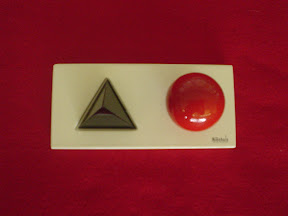
The classrooms are sunny, peaceful and equipped with high quality learning materials arranged on accessible shelves in sequence from simple to complex, and from the most concrete to those that are most abstract. As children progress through the materials they are exposed to broad curriculum, learning about the world in a holistic, inviting approach.
Within the limits of social discipline, the children are free to move around, to work with one another or on their own and to pursue a chosen activity. A mixed age group provides a social setting with special opportunities for personal growth. As children discuss their activities and learn from each other, they develop the basis of cooperation, sharing and relating to one another.
Older children develop sensitivity, pride and reinforce their knowledge by helping their younger classmates. Younger children are eager to progress as they admire the achievements of their role models. This and the individual programming allow each child to find comfort in their abilities and pace. As the child’s skills increase, he is introduced, through concrete experiences the areas of language, mathematics, history, science, geography, music and art. The materials that make these experiences tangible to him serve as touchstones in his memory for many years to clarify the abstract terms he meets within his future learning experiences.